Field note 002 · Workflow
Build a prep line that does not cross tracks
Two boards, distinct utensils, and a deliberate landing zone can make a home kitchen faster while keeping raw meat, poultry, and seafood away from foods that will not be cooked.
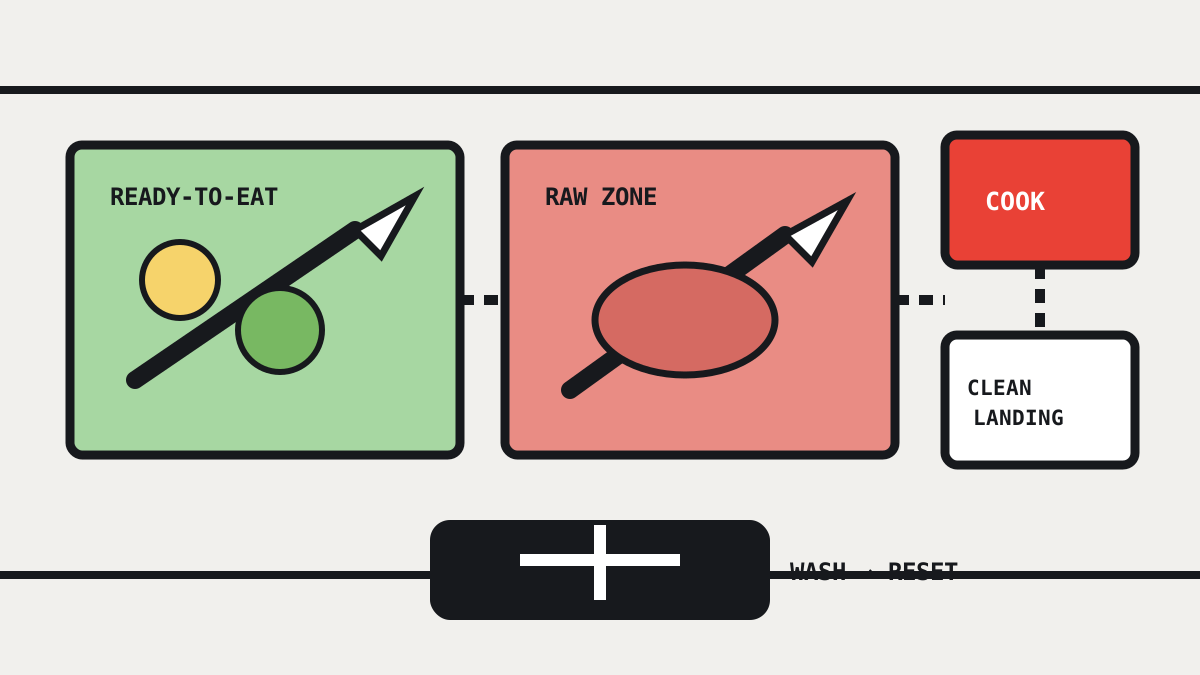
Speed in a home kitchen rarely comes from moving the knife faster. It comes from removing decisions: where clean food goes, where raw food stops, which plate receives cooked food, when hands are washed, and what must be cleaned before the next task.
FoodSafety.gov recommends one cutting board for produce and other foods that will not be cooked before eating, and another for raw meat, poultry, or seafood. That separation is the backbone of this station. Color helps, but the system should still work in dim light or for someone who does not distinguish the colors easily. Use different shapes, edge marks, labels, or storage positions as a second cue.
Packaging, hands, knife handles, faucets, phones, towels, spice jars, plates, and refrigerator handles can all carry raw juices beyond the board. Design the workflow around every touch, not only the cutting surface.
1. Map four zones before food comes out
Ready-to-eat zone
Washed produce, herbs, bread, garnishes, and foods that receive no further cooking. Give this board the cleanest traffic path.
Raw zone
Raw meat, poultry, or seafood; its dedicated board and knife; packaging tray; and a direct route to the pan.
Cook zone
Pan, heat-safe utensils, thermometer, and a clean landing plate that never held the raw food.
Reset zone
Soap, running water, approved sanitizer if needed, drying space, and a route that does not splash clean food.
On a small counter, zones can happen in time instead of side by side. Prepare ready-to-eat ingredients first, move them to covered containers, clear and wash the station, then set up the raw board. What matters is a complete reset before raw food occupies the space and another reset before ready-to-eat food returns.
Keep the trash or packaging bowl on the raw side so contaminated wrapping does not travel across the counter. Put recipe notes and the phone outside both food zones. Premeasure seasonings into small dishes before touching raw food so the original containers stay clean.
2. Choose boards by usable area and maintenance
USDA says consumers may use wood or nonporous cutting boards for raw meat and poultry; nonporous surfaces are easier to clean. Material alone does not create a safe workflow. The board must fit the food, fit the sink or dishwasher used to clean it, sit securely, and remain in cleanable condition.
| Specification | Why it matters | What to verify |
|---|---|---|
| Usable dimensions | A board crowded by the food sends scraps and juices over the edge. | Flat working area after handles, grooves, and raised edges are excluded. |
| Stability | A moving board slows cutting and adds injury risk. | Feet, edge grip, flatness, and the maker’s approved nonslip setup. |
| Juice control | A groove may contain liquid but reduces usable area and can be harder to clean. | Groove capacity, corners, cleanability, and whether the task needs it. |
| Cleaning method | A board is only practical if it fits the sink or dishwasher and tolerates that cycle. | Dishwasher limits, water temperature, detergent, drying, and oiling instructions. |
| Visual distinction | Clear identity reduces accidental board swapping. | Color plus a second cue such as shape, label, edge, or storage slot. |
| Replacement condition | Deep grooves and cracks can become hard to clean. | Maker guidance and routine inspection under strong light. |
USDA advises discarding wooden or plastic boards that are excessively worn or have hard-to-clean grooves. A valuable board is not one kept forever; it is one whose care and replacement point are clear.
3. Build a knife station around the board
Choose a board large enough that the knife can complete its stroke without striking a raised rim, bowl, or ingredient pile. Place a discard bowl near the top corner and containers for finished prep beyond the knife’s travel. Keep the handle side of the board clear so the knife can be set down fully on the board with its edge facing away from the reach path.
Dry, secure footing matters. Use only a nonslip mat or setup suitable for the board and counter; follow the board maker’s instructions. A damp towel is sometimes used in kitchens, but it can become a contaminated cloth and may not suit every counter or board. If it is part of the setup, dedicate it to that board, keep it flat, and launder it after the task.
Do not test sharpness with a finger. Maintain the edge using the angle and method intended for the knife, and store it so the edge is protected and hands do not search through a drawer of loose blades. A dull or damaged knife can increase force, while an unstable board can move regardless of edge condition.
4. Work from clean to raw, then cross the cook step
- Clear and wash. Wash hands with soap and water for at least 20 seconds. Start with a clean counter, tools, and boards.
- Prepare ready-to-eat food. Wash produce under running water as directed; do not use soap or bleach on produce. Cut garnishes, salad, bread, and foods that will not be cooked.
- Containerize and move. Put finished ingredients in clean containers away from the raw zone. Move the clean board if the space is needed.
- Set the raw station. Bring out the second board, dedicated knife or clean knife, raw-food tray, packaging bowl, and pan. Do not wash raw meat or poultry; splashing can spread germs.
- Transfer once. Move raw food from its board directly to the cooking vessel. Treat the board, knife, hands, and nearby raw-side items as contaminated.
- Wash hands and change tools. Wash before touching controls, clean plates, garnishes, ready-to-eat food, or the thermometer body if it was not protected.
- Cook and verify. Use a food thermometer in the correct location and follow current safe minimum internal temperatures.
- Land on clean equipment. Cooked food goes to a clean plate with clean utensils, never back to the raw tray.
CDC describes cross-contamination as transfer from contaminated food, surfaces, hands, boards, utensils, or other objects. A two-board system reduces one major route; it does not replace handwashing, clean utensils, temperature control, or prompt refrigeration.
5. Clean first, then sanitize when needed
Cleaning and sanitizing are separate steps. Cleaning with hot, soapy water removes food, grease, and debris. A sanitizer works best only after the surface is clean. USDA recommends washing boards after each use, rinsing with clear water, and air drying or drying with clean paper towels.
For a board or utensil that touched raw meat, poultry, seafood, or eggs, follow current public-health guidance and the item’s care instructions. USDA’s home cutting-board guidance describes a sanitizing solution of one tablespoon of unscented liquid chlorine bleach per gallon of water: flood the cleaned surface, let it stand for several minutes, rinse with clear water, and air dry or pat dry with clean paper towels. Verify the bleach product is appropriate and follow its label. Never mix bleach with ammonia, acids, or other cleaners.
Commercial sanitizers must be labeled for food-contact surfaces and used at the stated concentration, contact time, temperature, and rinse requirement. A surface disinfectant is not automatically appropriate for cutting boards or utensils.
Clean the sink and faucet area after raw-food preparation if they were touched or splashed. Replace or launder cloths that crossed into the raw zone. Let boards dry completely with air reaching both faces before stacking them.
A 20-minute station audit
- Place the largest food you regularly cut on each board and confirm clear knife travel.
- Mark the ready-to-eat and raw boards with two distinct cues.
- Trace every hand contact from refrigerator to pan, including spice jars, drawer pulls, and controls.
- Identify the clean landing plate before cooking begins.
- Confirm each board’s dishwasher, hand-wash, drying, and maintenance instructions.
- Inspect both faces and edges for cracks, warping, loose feet, and hard-to-clean grooves.
- Move the phone and recipe out of the splash and raw-contact path.
- Time a full clean-to-raw transition and remove the step that causes backtracking.
Use the homepage prep-line planner to identify the job that slows the station. The listing standard explains why exact dimensions, food-contact documentation, cleaning limits, replacement parts, and authorized supply must be verified before any board, knife, container, or tool becomes buyable here.